The Ideal Caravan Companion: Understanding Three-Way Fridges
Flexibility is the name of the game when caravanning. You can stay an extra night by the lake when the view is too good to leave, change your destination mid-drive or maybe decide to sleep in because there’s no checkout time pushing you out the door.
Many caravan appliances are made with the same idea in mind. Take caravan 3-way fridges. They can run on three power sources, hence the name, so you’re not tied to one fixed way of doing things. So, if you are still hesitating, reliable caravan 3 way fridges are an easy way to complete your setup for maximum flexibility on the road.
What is a 3-way fridge?
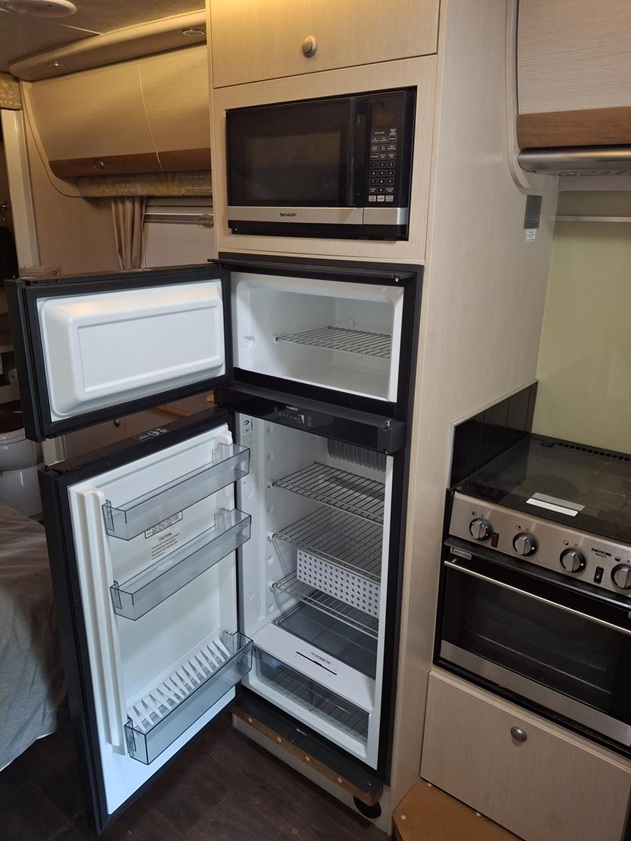
This versatile RV appliance can run on 12-volt power, mains electricity, and LPG. For instance, when you’re driving, the fridge uses 12V power from your vehicle to keep the food cold.
When you stop at a caravan park, you can plug into 240V mains power. The fridge then runs like a normal household unit. When you are camping without electricity, you can switch to gas. In this instance, bottled gas is an efficient and convenient way to power your fridge.
Depending on conditions, a 3 way RV fridge can run on a 9kg gas bottle for up to a few weeks before it needs refilling. So, you can still enjoy chilled food and drink in remote areas. In comparison, a 2-way fridge usually runs on 12V and 240V. It cannot use gas, so you’ll need a power source most of the time.
How Does It Work?
This fridge doesn’t have a noisy mechanical compressor. Instead, it has evaporating ammonia as a cooler. As the ammonia evaporates, it absorbs heat from inside the fridge, creating the cooling effect that keeps food and drinks cold. Since it uses absorption technology instead of a compressor, it has fewer moving parts and is very quiet.
In fact, it can be quieter than your home fridge. In an RV where nothing is far away from you, and the fridge is a step or two from the bed, that quiet operation is a big advantage.
Speaking of advantages, these versatile units are also easy to maintain. Fewer moving parts usually mean less mechanical wear and less routine maintenance than compressor-based units. Still, you need to ensure proper ventilation around the fridge, regularly clean the interior to prevent odours, and check the gas connection and seals from time to time if you’re running it on LPG.
Any Downsides?
While 3-way caravan fridges offer plenty of advantages, they do have a few drawbacks worth considering before you buy.
One of the most common complaints is the cooling performance in very hot weather. Unlike compressor fridges, 3-way models rely on an absorption cooling system, which can struggle when outside temperatures soar. While they can keep food safely chilled, they may not cool down as quickly or maintain the same temperature difference as a compressor fridge.
They also work best when kept level. If your caravan sits on uneven ground for extended periods, cooling efficiency can drop, meaning you may need to spend a little extra time levelling your setup.
Another consideration is cooling time. A 3-way fridge usually takes longer to reach its desired temperature than a compressor model. Many owners switch it on several hours before departure or even the night before a trip.
Next, when running on gas, you’ll also need to keep an eye on your LPG supply. While gas operation provides excellent off-grid flexibility, you’ll need to refill bottles occasionally.
Although these factors are worth considering, the flexibility and off-grid convenience of a 3-way fridge often outweigh its limitations.
How to Choose the Ideal One for Your Caravan?
Choosing the right 3-way caravan fridge starts with understanding your travel habits and the space available in your RV. Many would agree that the ideal model strikes a balance between available space and storage needs.
Size
Before comparing models, measure the space where the fridge will be installed. Caravan fridges come in a range of dimensions, and not every model will suit every layout.
Be sure to check the height, width, and depth of the available cavity and any ventilation requirements specified by the manufacturer. A larger fridge may sound appealing, but it should fit comfortably without restricting airflow or taking up valuable storage space. If you have a compact caravan, a smaller unit may be the more practical choice, leaving room for other essentials.
Capacity
Once you’ve narrowed down the size, think about how much food and drink you usually need to keep cool. Capacity is usually measured in litres and can vary significantly between models.
Solo travellers and couples may find a smaller fridge (in the 40–90 litre range) more adequate for weekend trips and short holidays. Families or those planning extended adventures often benefit from a large-capacity model (150 litres or more) that can store extra groceries, drinks, and fresh ingredients.
By considering size and capacity, you can choose a fridge that complements your caravan space and supports your travel.
About Author

ben